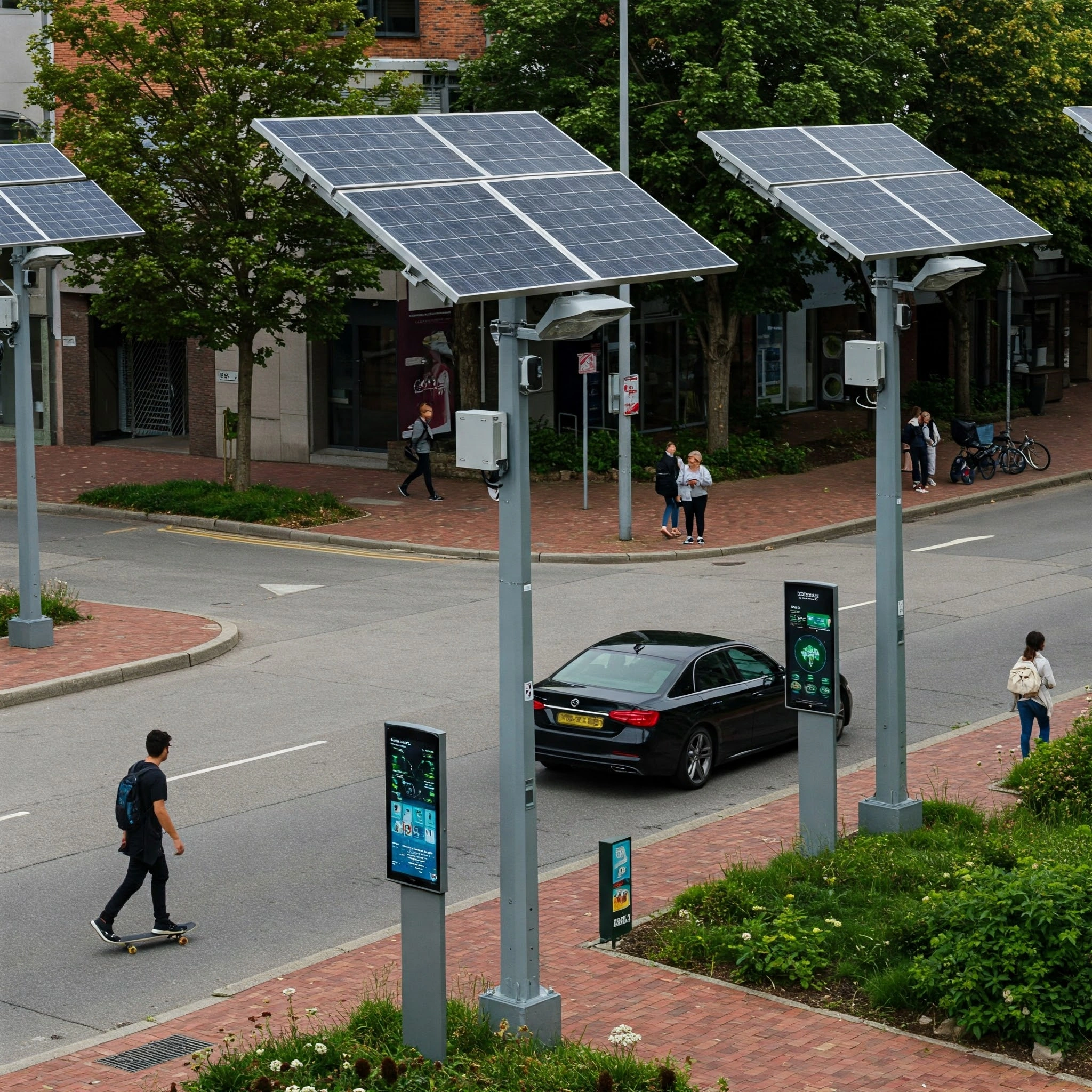



Nigeria is one of the largest off-grid lighting opportunities in Africa, and one of the most demanding markets to import into. Where the national grid is unreliable, diesel generators run expensive hours, and many roads, estates and compounds are lit late or not at all, a solar street light is not a nice-to-have — it is the cheapest way to put light where there is no dependable cable. The commercial logic is easy; the documentation is where most first-time importers lose time and money.
This guide is written for Nigerian importers, distributors and their buying teams. It explains how SONCAP conformity assessment actually works, which product standards apply to solar street lights, what the distributor structure looks like across Lagos, Onitsha, Kano and Abuja, and the commercial points to settle before a container leaves China. It is a working document, not a price list: certification rules and customs procedures change, so confirm the current requirement with your clearing agent and your appointed conformity assessment body before each shipment.
Why Solar Street Lights Fit Nigerian Conditions
- Grid supply is not a planning assumption. Where power is intermittent, a wired street light is only as reliable as the feeder behind it. A solar light carries its own energy store and runs the same schedule every night.
- Diesel is expensive light. Generator-powered lighting shifts the cost to fuel and maintenance. A correctly sized solar luminaire moves that cost into the initial hardware and then runs on daylight.
- High ambient temperature. Northern and central Nigeria see sustained heat. That is the strongest technical argument for lithium iron phosphate (LiFePO4) batteries over lead-acid, which degrade quickly when hot.
- Dust and harmattan. Airborne dust settles on PV modules and reduces charging. Module tilt, mounting height and a cleaning routine are part of system sizing, not an afterthought.
- Estate, campus and compound demand. Beyond public roads, private estates, factories, filling stations and school compounds are repeat buyers because they pay for their own security lighting.
How SONCAP Conformity Assessment Works
SONCAP is Nigeria’s conformity assessment programme for regulated imports, administered by the Standards Organisation of Nigeria (SON). It exists to stop substandard goods at origin rather than at the port. Two documents carry the weight: a Product Certificate (PC), which registers a product and its manufacturer for a defined scope and validity period, and a SONCAP Certificate (SC), which clears one specific shipment and is what the importer uses for customs clearance.
The PC is not issued in a single way. Depending on how much testing and factory evidence is available, products are registered through different conformity routes. The routes differ in the evidence required and in how much inspection each following shipment attracts:
| Conformity route | Best suited to | Evidence typically required | Effect on later shipments |
|---|---|---|---|
| Route A (unregistered goods) | First shipments, new suppliers, low volume | Product testing plus physical inspection of each shipment by the conformity assessment body | Every shipment is inspected; expect the slowest clearance of the three routes. |
| Route B (product registration) | Repeat importers with a stable product | Product testing plus factory assessment, leading to a Product Certificate | Shipment-by-shipment SC with reduced inspection, once the PC is in place. |
| Route C (product licensing) | Established brands with a quality management system | Additional quality management evidence plus testing, leading to a licence | Lightest per-shipment verification, but the highest entry requirement. |
In practice the sequence for an importer is: confirm the product is in a regulated category; appoint a SON-accredited conformity assessment body; obtain the PC for the product and manufacturer you intend to buy; then, per shipment, obtain the SC before the goods are shipped. The SC is issued against the PC, so a shipment cannot be certified on a product that was never registered — and a PC belongs to a named manufacturer, not to a category of product in general. Buyers who source from a trading company rather than a manufacturer regularly discover this late.
One clarification that prevents confusion on the ground: SONCAP applies to imported goods. Locally manufactured products fall under a separate programme, MANCAP. A supplier quoting “MANCAP” paperwork for an imported solar street light is describing the wrong regime.
Documents Nigerian Importers Usually Need
SONCAP is the certification layer, but it sits inside a wider import file. The table below summarises the documents that normally travel with a solar street light shipment and who produces each one. Requirements vary by product category and by channel, so treat this as a checklist to confirm with your clearing agent, not as a substitute for it:
| Document | Issued by | When it is needed | What it does |
|---|---|---|---|
| Product Certificate (PC) | SON-accredited conformity assessment body | Before the first shipment of that product and manufacturer | Registers the product and manufacturer for a defined scope and validity period. |
| SONCAP Certificate (SC) | SON-accredited conformity assessment body | Per shipment, issued before shipping | Certifies that the consignment conforms; used for customs clearance. |
| Form M and bank documentation | Importer’s bank | Before order is placed with the supplier | Opens the import transaction and links the shipment to the banking record. |
| Pre-Arrival Assessment Report (PAAR) | Nigeria Customs Service | Before arrival at port | Classifies and values the consignment for duty assessment. |
| Commercial invoice, packing list, bill of lading | Supplier and carrier | With every shipment | Identifies goods, quantities, HS classification and freight details. |
| Test reports and technical file | Manufacturer | Supporting the PC application | Provides the evidence the conformity assessment body tests and reviews. |
| Battery transport documentation | Manufacturer and carrier | Before booking lithium battery shipments | Covers the dangerous goods requirements that apply to lithium cells in transit. |
Standards That Apply to Solar Street Lights
Nigerian industrial standards (NIS) are largely aligned with International Electrotechnical Commission (IEC) standards, so a supplier who already designs to IEC criteria is usually working with the right reference framework. For a solar street light, the relevant areas are:
- Luminaires — IEC 60598 series: safety of the light fitting, including thermal, electrical and mechanical requirements.
- Ingress protection — IEC 60529: the IP code. For outdoor road lighting, an IP65-rated optical and electrical compartment is the practical baseline against rain, driven spray and dust.
- PV modules — IEC 61215 and IEC 61730: design qualification and safety of the solar panel, plus the mechanical load rating relevant to wind exposure.
- Lithium cells — IEC 62133: safety testing for cells and batteries, which matters both for product conformity and for transport.
- Photometric performance: delivered luminaire lumens and the light distribution used to size the installation. Ask for the photometric file, not just a wattage claim.
Two practical points follow. First, a declared standard is not evidence — ask for the test report behind it. Second, certification is product- and manufacturer-specific, so it cannot be inherited from a catalogue page. If you are preparing a public procurement file, our solar street light specification checklist for government tenders breaks the same requirements into the wording a bid document should contain.
Specifications That Decide Whether the Light Survives
Nigerian project sites punish shortcuts. The specification choices below are the ones that most often separate a system that is still working in year five from one that is not:
| Design factor | What to specify | Why it matters in Nigeria |
|---|---|---|
| Battery chemistry and placement | LiFePO4 with a ventilated battery compartment | High ambient heat is the main cause of early battery failure; placement controls the temperature the cells actually see. |
| Autonomy | Stated nights of backup on a full charge, project-defined | Covers consecutive overcast and harmattan-dust days, when charging input is lower. |
| Ingress protection | IP65 or better for the luminaire and controller housing | Rain, driven spray and fine dust all find unsealed electronics. |
| PV module and tilt | Monocrystalline panel sized to the load with tilt set for the site latitude | Dust accumulation and haze reduce yield; oversizing within reason protects autonomy. |
| Light output | Delivered luminaire lumens, not LED chip lumens | Prevents a paper specification that under-delivers on the ground. |
| Mounting and pole | Galvanised pole with a bracket that suits the site and the wind load | Coastal and open sites see different loading from sheltered compounds. |
| Serviceability | Replaceable battery and controller, with spare parts availability | The battery will be replaced before the luminaire is; design for it and the asset lasts. |
Because these choices interact, a responsible supplier sizes the system from your site rather than quoting a single model. Our wattage, pole height and spacing guide explains how mounting height and road width drive the configuration, which is the fastest way to sanity-check any quotation you receive.
How Distribution Typically Works
Nigeria’s lighting trade is organised through regional wholesale hubs, and understanding them shortens your route to volume buyers:
- Lagos is the entry point for most containers and the largest wholesale market, with electronics and electrical trading concentrated around Alaba International Market. It is where national distributors and the import trade sit.
- Onitsha anchors the south-east trade and feeds retailers across Anambra and neighbouring states — the classic second-tier distribution layer.
- Kano and the northern cities are the natural channel for northern distribution, and a different set of site conditions: higher heat load, more dust, longer distances.
- Abuja concentrates government and institutional procurement, where written specifications, warranty terms and traceable documentation decide the award rather than the cheapest unit on the table.
For a manufacturer, the practical consequence is that the same product line has to be offered at different specification levels for different channels: a distributor stocking retail volumes has different expectations from an EPC contractor delivering an estate or an institutional tender. Qichenshop supplies both configurations — the A02 all-in-one series for integrated, fast-to-install applications and the A01 split series for higher-power or service-critical sites.
Commercial Points to Settle Before Ordering
Documentation and specification aside, four commercial variables decide whether a first order is smooth or painful. Fix all four in writing before the deposit:
- Quantity and branding. Our minimum order is 50 units, and OEM or ODM branding is available from that quantity. Sample orders are available: OEM samples at USD 50 and ODM samples at USD 300, plus freight collect, with the sample cost credited against the first bulk order.
- Payment terms. We work on T/T 30% deposit with the 70% balance before shipment, which we find keeps both sides aligned on inspection timing.
- Lead time. A typical production lead time of 15 days applies to standard configurations, with custom work running longer. Build shipping, SONCAP processing and port clearance time on top of production when you plan a delivery date.
- Warranty. Export orders carry a 5-Year Limited Warranty with the coverage written out per component, so the terms can be evaluated as a contract line rather than a marketing claim.
We do not publish a price list, because a solar street light quotation is only meaningful against a specification: battery chemistry and capacity, panel wattage, delivered lumens, pole and bracket configuration, and order volume. Send the same specification to every supplier you shortlist and compare line by line; the LiFePO4 versus lead-acid comparison is a useful reference for the battery section, since that is normally the largest cost driver.
What to Prepare Before You Ship
- Confirm whether the specific product category is regulated and which conformity route fits your volume and supplier.
- Confirm that the Product Certificate, if one exists, is issued to the actual manufacturer of your goods.
- Collect the technical file, test reports and photometric data before production starts, not after the container is booked.
- Agree the specification in writing, including delivered lumens, battery chemistry, autonomy and IP rating.
- Confirm the lithium battery transport documentation with your freight forwarder.
- Verify the current bank and customs documentation with your clearing agent for the specific port of discharge.
- Agree inspection timing and acceptance criteria against the written specification.
How Qichenshop Supports Nigerian Importers
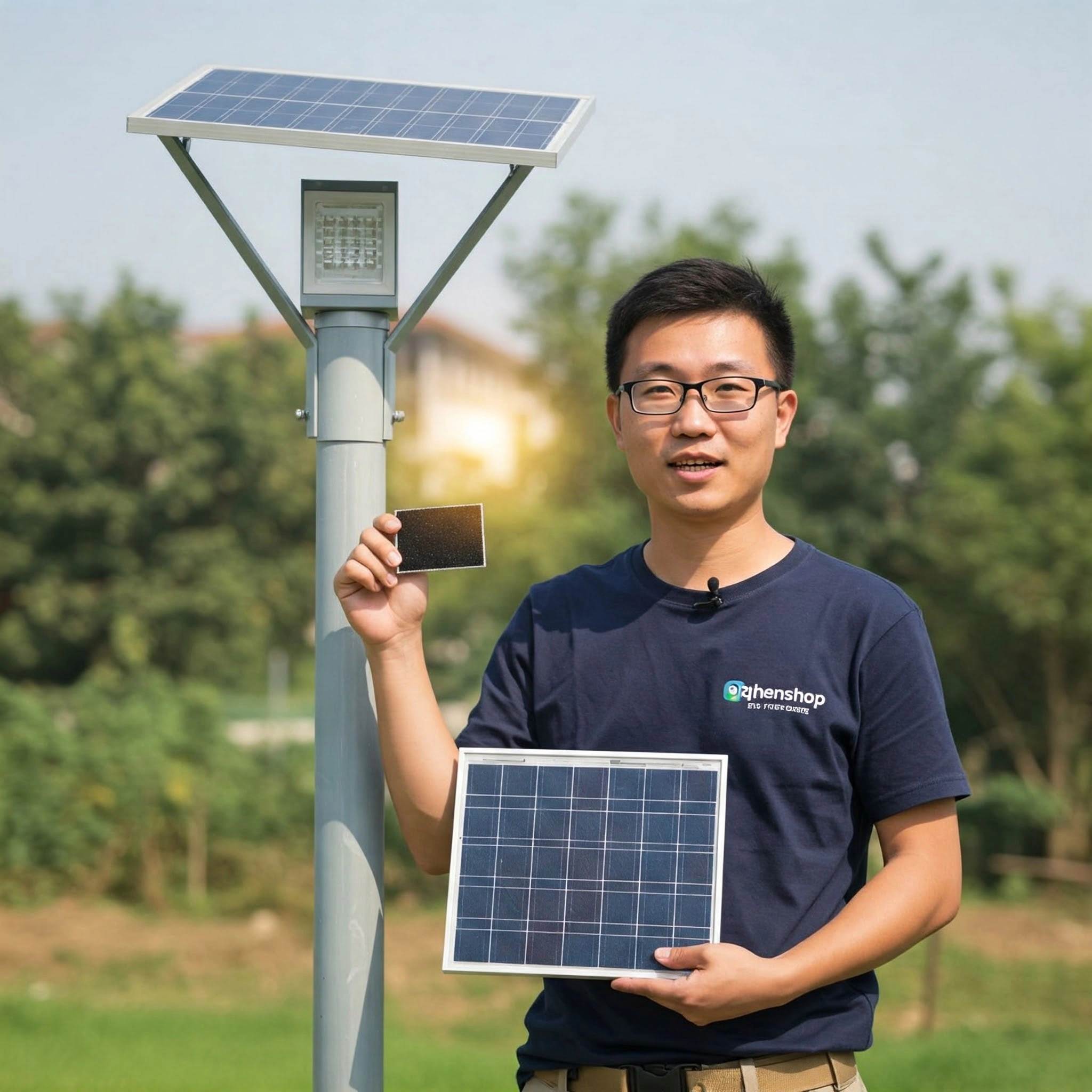
Qichenshop is the export brand of Jiangmen Qichen Lighting, a solar and LED lighting manufacturer in Guangdong, China — manufactured solar-powered street lights since 2010 and first registered as Zhongshan Qichen in 2013. We build both all-in-one and split solar street light lines, 28 models across the range, with LiFePO4 battery options and IP65-rated luminaires, and we supply distributors, wholesalers, contractors and EPC buyers across Africa and Southeast Asia.
On certification, we prefer to be precise rather than flattering. Qichenshop does not currently hold a SONCAP certificate for these products. What we provide is the material your conformity assessment body asks for: test reports, photometric data, product and factory documentation, and consistent production so that the certified sample matches the shipped goods. Certification status is confirmed in writing for each order — never assumed from a catalogue.
Planning a distributor order, an estate lighting package or an institutional tender in Nigeria? Send us the quantity, target road or area, mounting height and required nights of autonomy, and we will return a configuration and quotation, usually within one working day. Contact Qichenshop for a project quotation, or browse the full product catalogue.