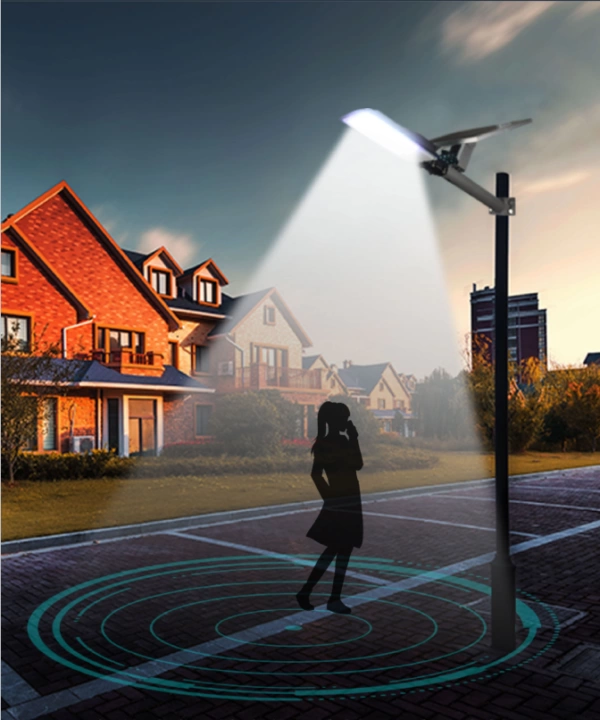



Government tenders are won or lost on the specification sheet long before anyone compares prices. When a municipality, barangay, or state agency puts a solar street lighting package out to bid, the technical clauses decide which suppliers can compete, which products qualify, and how the installed system will perform for the next decade. A vague specification invites low-quality bids; a precise one protects the budget and the public that uses the road at night.
This checklist covers the specification items that matter most in solar street light tenders, why each one is there, and the red flags evaluators should watch for. It is written for government contractors, consultants, and procurement officers preparing bid documents in tropical markets such as the Philippines and Nigeria.
Why Specification Details Decide Tender Outcomes
A solar street light is a system: panel, battery, controller, LED source, housing, and pole all interact. If the tender only states a wattage figure, two suppliers can quote very different systems under the same number. Specifying delivered performance, component quality, and documentation requirements makes bids comparable on like-for-like terms, and gives the award committee objective grounds for evaluation.
Solar Street Light Specification Checklist for Tender Documents
Use the table below as a base for the technical annex of your bid documents. Each row states what to specify and the common red flag to screen out.
| Specification Item | What to Specify | Common Red Flag |
|---|---|---|
| Delivered lumens | Fixture-level delivered lumens and target average illuminance (lux) on the road surface, not just LED chip ratings | Bids quoting only chip lumens or raw LED wattage with no fixture-level output |
| Battery chemistry and capacity | LiFePO4 chemistry stated explicitly, capacity in watt-hours (Wh) at system voltage, rated cycle life | “Lithium battery” with no chemistry, or capacity quoted only in Ah at an undisclosed voltage |
| Solar panel | Monocrystalline (or clearly stated type), rated Wp, and panel-to-battery sizing that supports the autonomy requirement | Marketing wattage numbers on the housing that do not match the panel’s rated Wp |
| Ingress protection | IP65 or IP66 for the complete luminaire, tested as an assembled fixture | IP rating claimed for internal components only, or no test reference at all |
| Autonomy | Backup nights required during consecutive rainy days (commonly specified as 2–3 nights), with load profile | Autonomy stated without battery capacity or load data to back it up |
| Charge controller | MPPT controller with stated charging efficiency and protection features (over-charge, over-discharge, reverse polarity) | Basic PWM controllers presented as equivalent, or controller brand/model omitted |
| Photometric files | IES or LDT photometric files for the exact model, enabling DIALux simulation of spacing and uniformity | No photometric files, or files belonging to a different product family |
| Pole and wind load | Mounting compatibility, pole height range, and wind-load design referenced to the local code (for example typhoon exposure in the Philippines) | Pole and luminaire specified by different bidders with no compatibility check |
| Warranty structure | Warranty split by component (light body, battery, controller), with spare-parts availability after the project | A single headline warranty number with no component breakdown or spares commitment |
| Compliance documents | Certificates required by the destination market — for example SONCAP for imports into Nigeria, or PS/ICC for certified electrical products in the Philippines — with verifiable validity dates | Expired, unverifiable, or recycled certificates from unrelated product models |
Two of these items deserve a closer look, because they account for most of the disputes we see after delivery: lumens and battery autonomy.
Specify Delivered Lumens, Not Chip Lumens
LED datasheets quote luminous efficacy per chip, but what the road actually receives depends on optics, driver losses, housing design, and operating temperature. A 100 W fixture from one supplier can deliver markedly more light on the pavement than a 200 W fixture from another. Tender documents should therefore ask bidders to state delivered lumens for the complete fixture and to support the layout with a photometric simulation. Our guide to wattage, pole height and spacing explains how power, mounting height and spacing interact: How to Choose Solar Street Light Wattage, Pole Height and Spacing.
Battery Chemistry and Autonomy: The Heart of the System
The battery is usually the first component to fail in cheap solar street lights, and in hot climates the gap between chemistries widens. LiFePO4 cells tolerate high ambient temperatures and deep daily cycling far better than lead-acid or generic ternary cells, which is why most current tender specifications name LiFePO4 explicitly and require capacity in watt-hours. For a full comparison, see LiFePO4 vs Lead-Acid Battery in Solar Street Lights.
Autonomy should be specified as nights of backup during consecutive overcast days, together with the lighting profile (for example full output for the first hours of the night, then motion-sensing output until dawn). Without the load profile, an autonomy figure cannot be verified against the battery capacity offered.
Documents to Request from Bidders
- IES or LDT photometric files for the exact model offered, plus a DIALux or equivalent lighting simulation for the project road.
- Product datasheets stating delivered lumens, battery Wh, panel Wp, controller type and IP rating.
- IP and aging test reports for the offered model, not a sister product.
- Component-level warranty terms in writing, including battery cycle-life definition.
- Spare-parts availability and lead times for battery, controller and LED module after project handover.
- Certificates for the destination market with verifiable validity dates.
Red Flags That Should Disqualify a Bid
- Prices far below comparable bids with no specification basis for the difference.
- Battery capacity quoted in Ah without system voltage, or chemistry left unspecified.
- Photometric files missing, or supplied for a different product than the one quoted.
- A warranty number with no component split and no spares plan.
- Compliance certificates that cannot be verified with the issuing body.
How Qichenshop Supports Government Tender Projects
Qichenshop (Jiangmen Qichen Lighting) has manufactured outdoor lighting since 2010, first registered as Zhongshan Qichen in 2013, and supplies all-in-one solar street lights from compact residential units to high-output models for municipal roads. Our published product datasheets state delivered lumens, LiFePO4 battery capacity in watt-hours, panel rating and IP rating for each model, so evaluators can check bid compliance line by line — see the All-in-One Solar Street Light A01 as an example, or browse the full range in our solar street light shop.
For tender-scale purchases the minimum order starts from 50 units per model, typical production lead time is 15 days, and payment terms are 30% deposit by T/T with the balance before shipment. Documentation support includes datasheets, photometric data and certification documents on request — ask us for the current certificate package for your destination market so your bid files only verifiable documents.
Preparing a tender specification or responding to one? Contact the Qichenshop team with your road width, lighting hours and autonomy requirements, and we will return a specification sheet you can attach to the bid documents.