


Why Two “Identical” Quotes Can Differ by 40 Percent
Ask three factories to quote the same 60W solar street light and you will likely receive three prices spread far apart. None of the quotations is necessarily wrong. Each factory has simply made different assumptions about the components behind the headline wattage, and those assumptions are where the cost lives.
The wattage printed on a datasheet describes the LED chip, not what reaches the road. The battery capacity in ampere-hours means little without its voltage and chemistry. A solar panel rated at 100W under laboratory conditions may deliver far less in the field. Fair comparison means normalizing these variables first, then looking at the number.
Factor 1: Real Light Output, Not Chip Wattage
Start with lumens delivered at the fixture, not watts. Two 60W fittings can differ by a factor of two in actual output depending on LED efficacy, driver quality and optical efficiency. A reputable supplier will state lumens per watt at the fixture level and provide an IES file or a photometric simulation for your pole height and spacing.
Ask every bidder the same question: what is the delivered lumen output at the working current, and what illuminance does it produce at my mounting height? Reject answers given only in watts. This single habit removes the largest source of confusion in cross-supplier comparison.
Factor 2: Battery Chemistry and Usable Capacity
The battery is typically 30 to 40 percent of a solar street light bill of materials, and it is where low-cost quotes hide their savings. Lithium iron phosphate (LiFePO4) cells tolerate deep daily cycling and high ambient temperatures far better than sealed lead-acid or gel batteries of the same nominal capacity.
Compare usable energy, not nominal ampere-hours: multiply voltage by ampere-hours, then apply the realistic depth of discharge for the chemistry and the days of autonomy you require. A 100Ah lithium pack delivering 80 percent of its capacity outperforms a 120Ah lead-acid pack limited to 50 percent. For a detailed chemistry-by-chemistry breakdown, see our comparison of LiFePO4, lead-acid and gel batteries.
Also confirm the cell brand grade and the battery management system specification. Cycle life claims without a named cell supplier are marketing, not engineering.
Factor 3: Solar Panel Power and Sizing Margin
Panel wattage is quoted under Standard Test Conditions that your installation site will never reproduce. Real-world output depends on irradiance, temperature and tilt. When comparing quotes, check that each supplier has sized the panel against your location’s peak sun hours, the fixture’s nightly consumption, and a margin for cloudy days.
A quote that sizes the panel tightly to hit a price point will produce lights that dim early or fail during overcast weeks. Ask each bidder to show the energy balance calculation: daily generation versus nightly load, with the autonomy days they assumed. Suppliers who cannot show this calculation are pricing on hope.
Factor 4: Controller, Charging Profile and Operating Modes
The controller governs charging efficiency, battery protection and nightly behavior. MPPT controllers harvest noticeably more energy than PWM types under low light, which matters during monsoon or harmattan seasons. Confirm the low-voltage disconnect point, temperature compensation and the load protection features included.
Operating modes also belong in the comparison. Our standard configuration supports light control (dusk-to-dawn), timer control and microwave radar motion sensing as standard equipment; broader smart-city platform integration is available as an optional, customizable integration. Make sure each quotation states which modes and sensors are included rather than assuming parity.
Factor 5: Housing, Sealing and Build Quality
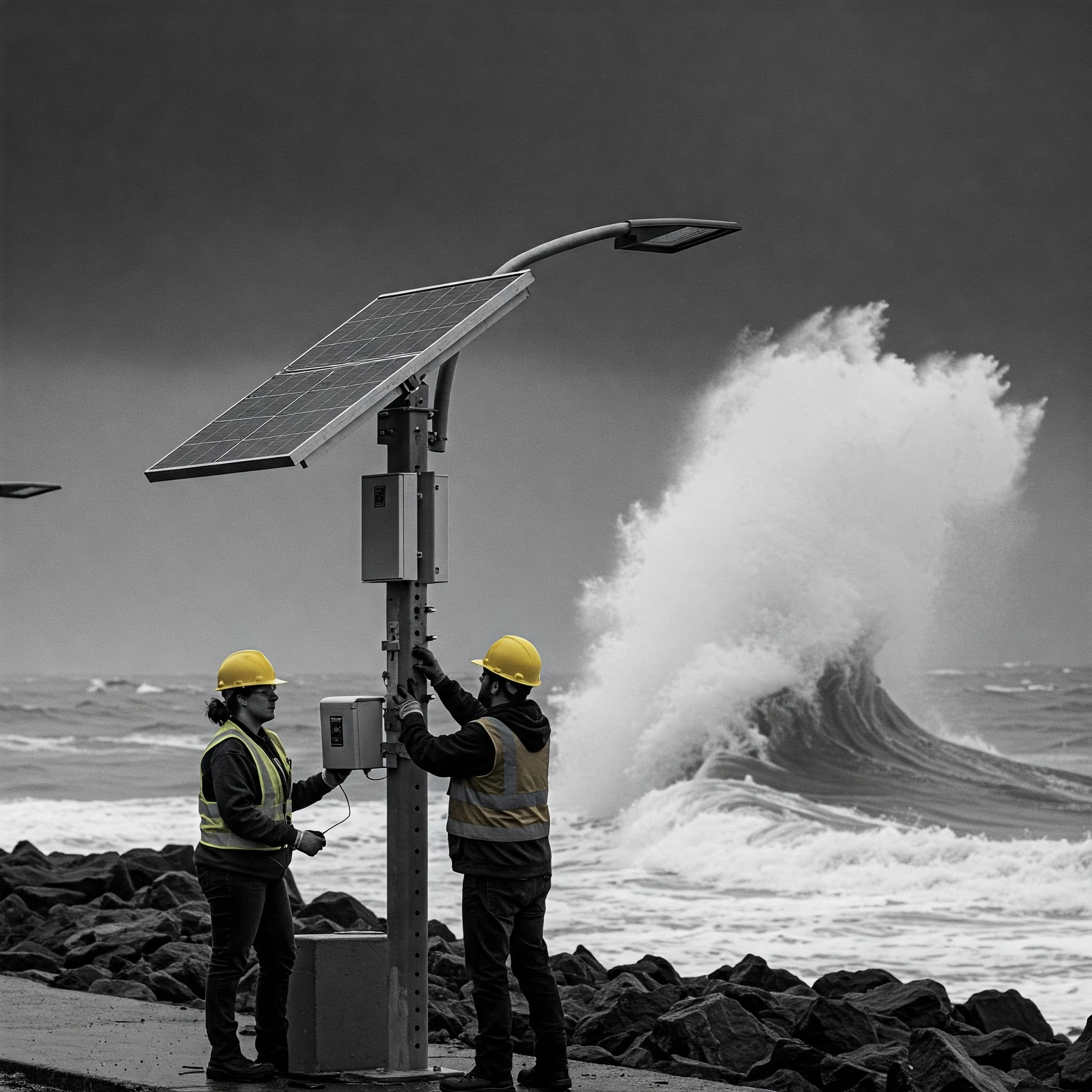
An ingress protection rating of IP65 should be the minimum for any outdoor solar luminaire, but a rating on paper is not the same as a rating in practice. Ask how sealing is verified in production: fixture-by-fixture testing, gasket materials, cable gland quality and the corrosion resistance of the pole bracket in coastal air.
Die-cast aluminum housings with powder coating outlast thinner stamped housings in humid and saline environments. If your project sits within a few kilometers of the ocean, weight the housing specification heavily in your comparison.
Factor 6: Warranty Terms and After-Sales Parts
A warranty is a cost item, not a free extra. Compare what each supplier actually covers, for how long, and under what claim process. Qichenshop provides a 5-Year Limited Warranty with a defined coverage standard and a claim procedure documented on our warranty policy page. A quote with a vague one-year “whole unit” promise and no claim process transfers all post-delivery risk to you.
Also compare parts availability. A supplier who can ship replacement batteries, panels and controllers for a model years after delivery protects your fleet’s uptime; one who only sells complete new units does not.
Factor 7: What the Quote Actually Includes
Quotes differ in scope as much as in price. Before comparing numbers, confirm each quotation covers the same items:
- Datasheet with delivered lumens, battery Wh, panel Wp and controller type per model
- Pole and bracket compatibility, or poles included in scope
- Packaging specification and container loading plan
- Sample policy: OEM samples at USD 50 and ODM samples at USD 300, freight collect, refundable against a first order of USD 1,000 or more
- Payment terms, production lead time and quotation validity period
- Export documentation provided, and who is responsible for destination-country clearance and local certification
| Comparison Item | What to Normalize | Red Flag |
|---|---|---|
| Delivered lumens | Lumens at fixture at working current | Only chip wattage quoted |
| Battery | Chemistry + voltage + Ah + usable DoD | Amp-hours without voltage or chemistry |
| Solar panel | Wp sized against peak sun hours and autonomy days | Panel wattage stated without energy balance |
| Controller | MPPT or PWM + protection features | Controller type not stated |
| Sealing | IP65 verified fixture by fixture | Rating claimed without test process |
| Warranty | Coverage scope, duration, claim process | Vague duration with no process |
| Scope | Datasheet, packing, lead time, sample and payment terms | Price with no supporting documents |
Red Flags in Low-Cost Quotations
Certain patterns reliably indicate a quote that will cost more than it saved:
- Wattage or lumen claims that contradict the supplied photometric data
- Generic “lithium battery” with no chemistry, cell brand or BMS details
- Panel wattage unchanged across wildly different project locations
- No datasheet, no IES file, no energy balance calculation
- Warranty shorter than the realistic service life of the battery
- Unwillingness to provide a pre-shipment inspection report or aging test records
If a quotation triggers two or more of these, treat the price as unreliable regardless of how attractive it looks.
How to Build an Apples-to-Apples RFQ
The comparison quality is decided before the first quote arrives. Structure your request for quotation so every supplier answers the same grid: mounting height, spacing, nightly runtime, autonomy days, project location, and the documents you expect back (datasheet, photometric file, energy balance, warranty terms).
Our step-by-step guide to buying solar street lights wholesale from China walks through the full RFQ-to-container process, and our pre-shipment inspection checklist defines what to verify before the goods leave the factory. For market-specific requirements, the Philippines buyer guide covers LGU and barangay project procurement in detail.
Once quotes are in, shortlist two suppliers, order samples under the sample policy each offers, and test them before scaling. A 30W to 120W all-in-one model such as the A21 or a split configuration like the A01 will let you verify delivered lumens, runtime and build quality against the datasheet you were quoted.
How Qichenshop Quotes
We price against your actual project parameters, not a generic wattage. Every quotation includes a per-model datasheet stating delivered lumens, battery chemistry and capacity, panel wattage and controller configuration, so our number is directly comparable with any other supplier who quotes honestly.
Commercial terms are fixed and transparent: minimum order quantity from 50 units, payment by T/T with 30 percent deposit and 70 percent against copy of B/L, standard production lead time of 15 days (15 to 25 days for customized configurations), and quotations valid for 30 days. Samples are available under the OEM and ODM terms listed above.
If you are collecting quotes for a tender or distributor program, send us your project parameters and receive an itemized quotation you can put directly into your comparison grid. Request an itemized quotation from Qichenshop or download the datasheets for the models you are evaluating first.