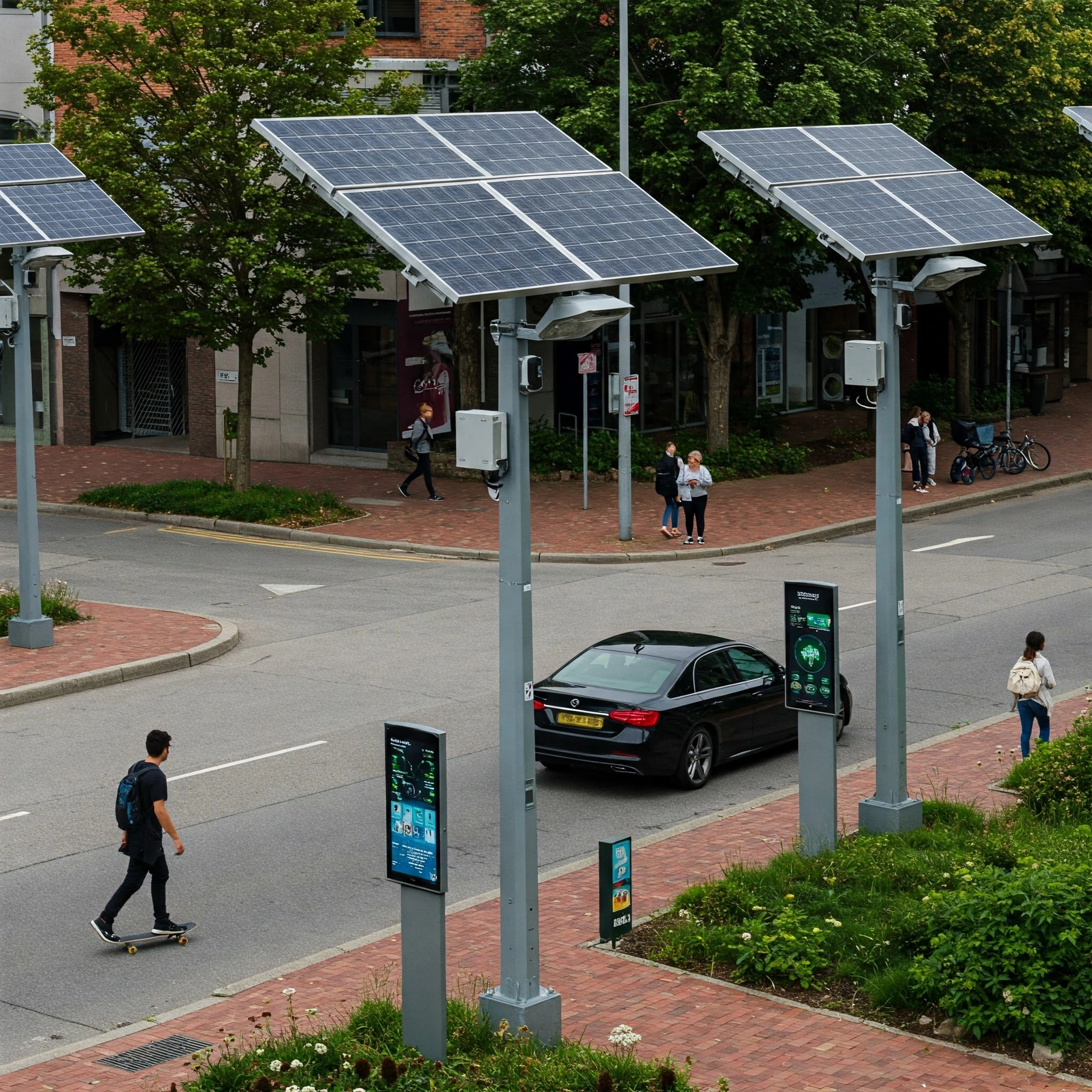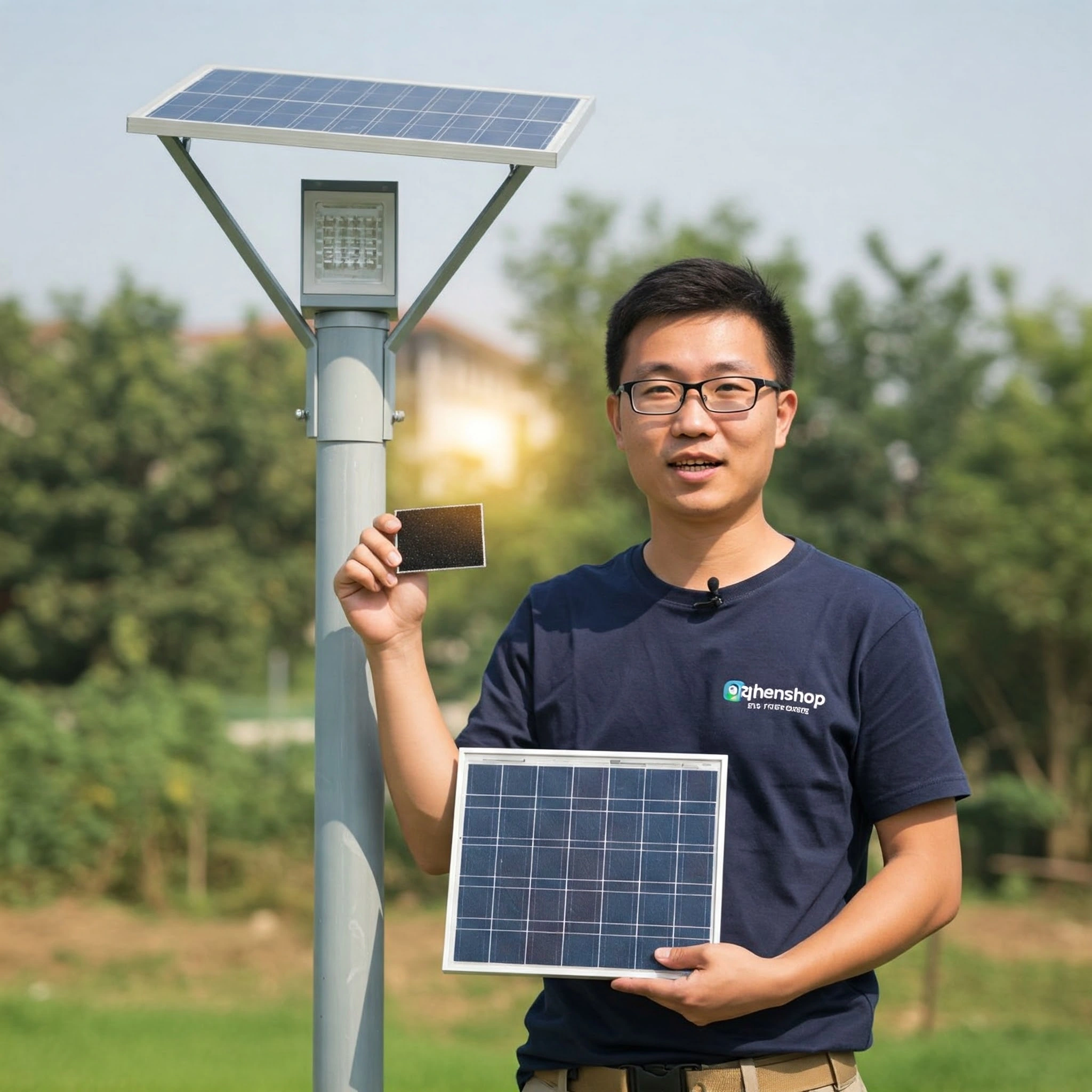



The Philippines is one of the most active solar street light markets in Southeast Asia. Barangay roads, LGU projects, subdivisions, resorts and industrial compounds across the archipelago are lit with solar luminaires because trenching cable across islands, brownouts and typhoon-prone coastlines is slow and expensive. If you are importing for the first time, the commercial side of the purchase is straightforward; the documentation is what decides whether your container clears Manila or Cebu smoothly.
This guide is written for Philippine importers, distributors, contractors and LGU procurement teams. It explains how the Bureau of Philippine Standards (BPS) certification system works, which documents a shipment normally needs, what the exporter supplies versus what the importer arranges, and the commercial points to settle before the deposit. For the buying decision itself, our solar street light buyer guide for LGU and barangay projects covers sizing, specification and supplier selection; this article stays on the import and compliance side.
Why Solar Street Lights Keep Winning Projects in the Philippines
- Grid reliability is not uniform. In many service areas, a wired street light inherits every brownout on its feeder. A solar luminaire carries its own battery and runs its schedule regardless of grid events.
- Archipelago logistics. Islands and far-flung municipalities often have thin electrical infrastructure. A self-contained light that ships in a container and installs on a pole, with no trenching, fits that reality.
- Public procurement demand. Barangay and LGU lighting programs are recurring budget lines. Solar street lights are frequently specified precisely because they avoid the civil works and right-of-way issues that wired installations bring.
- Private demand follows. Subdivision developers, resorts, ports, warehouses and agro-industrial compounds buy the same hardware for perimeter and access-road lighting, which gives distributors a commercial channel alongside government projects.
How the BPS Certification System Works: PS and ICC
Product conformity in the Philippines is administered by the Bureau of Philippines Standards (BPS) under the Department of Trade and Industry (DTI). Two instruments matter for imported goods, and they sit at different ends of the transaction:
| Instrument | Who it belongs to | What it covers | When it matters |
|---|---|---|---|
| PS (Philippine Standard) license and mark | The manufacturer, local or foreign | Grants the right to apply the PS mark to a product certified against the relevant Philippine National Standard (PNS) | Long term: a manufacturer-level license, applied for and maintained by the manufacturer. |
| ICC (Import Commodity Clearance) | The importer, per shipment | Certifies that a specific imported consignment of a regulated product conforms to the applicable PNS | Per shipment: obtained before the goods are released from customs, with the ICC sticker applied to the product or packaging. |
The practical sequence for an importer is: confirm whether the product category is currently on the BPS list of products under mandatory certification; if it is, appoint a BPS-recognized testing and inspection body, arrange shipment inspection or sampling as the route requires, and obtain the ICC before customs release. The list of regulated products is updated by DTI administrative orders, so verify the current version rather than relying on a supplier’s memory or a year-old blog post.
One point worth stating plainly: whether a given street light specification falls under mandatory certification at the time of your shipment is a question for your customs broker and the current BPS list — not something an exporter’s catalogue can answer. Build the answer into your landed-cost calculation before you sign the order, because testing and clearance fees, when they apply, are the importer’s side of the ledger.
Who Does What: The Responsibility Line Between Exporter and Importer
Most import friction comes from each side assuming the other is handling a document. The table below is how we draw the line with Philippine buyers:
| Stage | Exporter supplies (Qichenshop) | Importer arranges (you) |
|---|---|---|
| Before the order | Technical datasheets, photometric data, test reports for the quoted models, HS classification reference | Confirm regulated-product status and certification route with a licensed customs broker; calculate landed cost including any ICC testing and clearance fees. |
| Production and pre-shipment | Commercial invoice, packing list, pre-shipment inspection support, battery dangerous goods documentation (UN38.3 test summary, MSDS) | Book the vessel, appoint the surveyor or inspection body if the certification route requires one. |
| Shipping | Bill of lading draft confirmation, Certificate of Origin (Form E under the ASEAN–China FTA, where applicable) | Import entry filing with the Bureau of Customs through the broker. |
| Arrival and clearance | Additional document copies on request | Customs clearance, any BPS/ICC processing for regulated categories, inland delivery to the project site. |
Standards to Reference in a Philippine Specification
Philippine National Standards (PNS) for electrical and lighting products are largely adopted from International Electrotechnical Commission (IEC) standards, so a factory that designs and tests to IEC criteria is already working in the right framework. The reference points that matter for a solar street light:
- Luminaire safety — IEC 60598 series: the safety standard family for light fittings, covering electrical, thermal and mechanical requirements.
- Ingress protection — IEC 60529: the IP code. For outdoor road and area lighting, IP65 is the practical baseline for the optical and electrical compartment.
- PV module — IEC 61215 and IEC 61730: design qualification and safety for the solar panel, including mechanical load rating.
- Lithium cells — IEC 62133: safety testing for cells and battery packs, relevant both to product conformity and to transport.
- Photometric evidence: delivered luminaire lumens and a light distribution file, so the lighting level promised in a bid or a site plan can be verified rather than assumed.
A declared standard is not evidence. Ask for the test report behind each claim, and ask that reports reference the exact model and configuration you are buying. Our factory audit checklist lists the documents to request when you vet a manufacturer before the first order.
Documents a Philippines Shipment Normally Needs
Certification is one layer. The commercial and customs documents below travel with a typical solar street light shipment from China to the Philippines:
| Document | Issued by | Purpose |
|---|---|---|
| Commercial invoice and packing list | Exporter | Basis for customs valuation and shipment verification. |
| Bill of lading | Carrier | Title and transport document for the sea freight leg. |
| Certificate of Origin (Form E) | Exporter, through the China Council for the Promotion of International Trade | Claims preferential tariff treatment under the ASEAN–China Free Trade Agreement where the HS line qualifies. |
| HS classification reference | Exporter provides, broker confirms | Tariff and regulatory treatment depend on the correct code; the broker of record confirms the final classification. |
| Battery transport documents (UN38.3 test summary, MSDS) | Exporter | Required by carriers and airlines for lithium battery shipments; see our guide to shipping solar lights with lithium batteries. |
| Test reports and technical file | Exporter | Supports certification processing and LGU bid documentation. |
| Import entry and supporting filings | Licensed customs broker | Filed with the Bureau of Customs; the broker of record manages the process and any ICC step for regulated categories. |
Specifications That Suit Philippine Sites
The Philippines is typhoon-prone, humid, and in many places coastal. None of that argues against solar street lighting; it argues for specifying the system for those conditions:
| Design factor | What to specify | Why it matters in the Philippines |
|---|---|---|
| Mounting and wind load | Pole and bracket selected for the site exposure, with the design wind speed stated in the specification | Typhoon-exposed sites load poles very differently from sheltered compounds; state the requirement and let the supplier size for it. |
| Corrosion protection | Hot-dip galvanized pole, marine-appropriate coating for coastal sites, stainless fasteners | Salt-laden air near the coast is the fastest route to rusted hardware and warranty disputes. |
| Battery chemistry | LiFePO4, in a ventilated compartment | High humidity and heat punish lead-acid batteries; LiFePO4 holds cycle life far better in tropical conditions. |
| Autonomy | Nights of backup on a full charge, stated against the rainy-season profile | Extended overcast stretches reduce charging input; size autonomy for the worst month, not the average one. |
| Ingress protection | IP65 for the luminaire and controller housing | Monsoon rain and driven spray find unsealed electronics quickly. |
| Serviceability | Replaceable battery and controller with spare parts available | The battery is a consumable; a light designed for battery replacement outlives a sealed one. |
For a concrete example of how these choices translate into a product line, the A01 split series separates the panel, battery and luminaire for easier high-power and service-critical installations, while the A21 all-in-one series integrates everything on the pole head for fast installation. Both are configured with LiFePO4 batteries and IP65-rated housings; exact configurations are quoted against your site parameters.
Commercial Points to Settle Before Ordering
Fix these five points in writing before the deposit, and the rest of the transaction tends to run itself:
- Quantity and branding. Our minimum order quantity starts from 50 units, and OEM or ODM branding is available from that quantity. Samples are available for evaluation: OEM samples at USD 50 and ODM samples at USD 300, plus freight collect, with the sample cost refundable against a first order of USD 1,000 or more.
- Payment terms. T/T with a 30% deposit and the 70% balance before shipment, which keeps both sides aligned on inspection timing before the balance falls due.
- Lead time. A typical production lead time of 15 days applies to standard configurations; customized configurations run 15 to 25 days. Add sea freight to Manila or Cebu, certification processing where it applies, and port clearance on top when you plan the delivery date.
- Warranty. Export orders carry a 5-Year Limited Warranty with coverage written out per component, so the terms can be evaluated as a contract line rather than a marketing claim.
- Quotation validity. We hold quotations for 30 days, which is normally enough for an LGU or corporate approval cycle; ask for a reconfirmation if yours runs longer.
What to Prepare Before You Ship
- Confirm with your customs broker whether the specific product category is on the current BPS mandatory list, and what the clearance route would cost if it is.
- Collect the technical file, test reports and photometric data before production starts, not after the container is booked.
- Agree the specification in writing: delivered lumens, battery chemistry and capacity, autonomy, IP rating, pole and bracket configuration.
- Confirm the lithium battery transport documentation with your freight forwarder at booking time.
- Decide who applies for the Certificate of Origin and confirm the HS line qualifies for Form E treatment.
- Agree pre-shipment inspection timing and acceptance criteria against the written specification.
- Plan inland delivery from the port to the project site, including any island transshipment, before the vessel sails.
How Qichenshop Supports Philippine Importers
Qichenshop is the export brand of Jiangmen Qichen Lighting, a solar and LED lighting manufacturer in Guangdong, China. We have manufactured solar-powered street lights since 2010 and were first registered as Zhongshan Qichen in 2013. The range covers 28 models across all-in-one and split configurations, with LiFePO4 battery options and IP65-rated luminaires, supplied to distributors, contractors and EPC buyers across Southeast Asia and Africa.
On certification, we prefer to be precise rather than flattering. Qichenshop does not currently hold a PS license for these products, and the ICC, where a category is regulated, is by design a document the importer obtains per shipment. What we provide is the material the process runs on: test reports, photometric data, product and factory documentation, correct HS references and complete export paperwork, plus consistent production so the certified sample matches the shipped goods.
Planning a distributor order, a subdivision package or an LGU project in the Philippines? Send us the quantity, the target road or area, mounting height and required nights of autonomy, and we will return a configuration and quotation, usually within one working day. Contact Qichenshop for a project quotation, or browse the full product catalogue.